p.s. This blog is 100% human. Topics like these need some Aastha, which AI cannot have, yet. And makes no attempt at a quick read.
This is a season for Ramayana, once again. Thanks to the most expensive India movie ever ($500 M) in town – Ramayana Part I.
I won’t talk about the movie. My favorite writer and movie critic Suvika does that here When Ravana got a story, and Rama got a summary. My favorite renderings as a movie are listed at the end.
For those who don’t know Ramayana, read the intro.
The rest can skip to As they face each other in battle below
Background on Ramayana
Ramayana (Rama’s Journey) is an Indian epic first published ~2,500 years ago by Sage Valmiki in Sanskrit. 24,000 couplet verses describe the life of Rama. Rama is Lord Vishnu’s incarnation on Earth as a prince. As Rama, he could only lead the life of a human with all the trials / tribulations / limits, and no divine powers to draw upon (constraint needed to defeat a demon king Ravana with a blessing of immortality and incincibility, except against ‘lowly’ humans and monkeys).
Rama faced innumerable challenges – physical, emotional and spiritual – throughout his life. More than most humans endure. Loss of his crown, exile to the forests, death of his father while he was away, temptations of a seductress, lots of demon attacks, abduction of his wife, loss of friends and a battle against Ravana to get back his wife Sita against all odds. And at every stage he chose the harder path of Dharma, and prevailed with dignity.
Maryada Purushottam.
With his actions, rather than just words, Rama sets an example of what a perfect son-king-warrior-husband-bother-friend-leader-human could be. It is that human-ness that endears Rama to so many. For millions of people, over the last 3-5 thousand years, he is living history, faith and divine guidance – all across the Indian subcontinent (India, Nepal, Sri Lanka and Burma) and Southeast Asia (including Thailand and Cambodia).
Even today for many Rama and his life continues to serve as the benchmark for a perfect human being – thousands of years separated in space and time.
As they face each other in battle
I want to share a few personal learnings and feelings from a very famous scene in one of the versions of Ramayana – one by Goswami Tulsidas. Yes, there are many retellings. Yes, there is an alternate version in Valmiki Ramayana and a divine chariot in play for the same scene.
Indian mythology often has many retellings because some are creative liberties, few others are to localize / to make meaning, and others are expressions of personal devotion.
Most Indians never debate which version is right – but only whether the intent feels right. In a country, where geography and culture are built on mythology and narratives; what seems true and believable to most with the right devotional intent is more important than what the facts could have been.
Aastha, Shradha & Bhakti – source of intent being the only filter to accept retelling.
(Detour. For many who believe and were taught in school that India as a nation did not exist till the British stitched it together, would recommend reading India: A Sacred Geography by Diana Eck)
This retelling of a famous war scene is by a 16th century poet Goswami Tulsidas. Tulsidas-ji chose to write it in Awadhi (the spoken dialect of the illiterates), and not in Sanskrit (the language of most scriptures, and of the high priests / elite). He endured a lot of controversy and was ostracized for that choice. He wrote it with a pure devotional lens and with all the love of his heart. A quiet rebel.
स्वांतः सुखाय तुलसी रघुनाथगाथा
for my own inner happiness and peace of mind (I am) narrating the story of Raghunath / Rama
Not surprisingly his poems (like Hanuman Chalisa) and rendering endures / endears across the country centuries later – even in parts of south of India where Hindi (and Awadhi) are resisted for political reasons.
I want to re-tell it in my own words. Beyond the spirituality and exposition of dharma, as I draw parallels to how leaders in start ups or disrupters can stand up against large incumbents / competitors. That size is not what matters to win. And pick up interesting leadership and entrepreneurship lessons from the works of a 16th century poet.
Tulsidas wrote this conversation as Rama’s advice on ways to win the war with Ravana, as well as the battle of life itself. So, the parallel I am drawing here can be accused of being a trivial and a material interpretation for LinkedIn likes. I am hoping the quiet rebel poet Tulsidas-ji will forgive me, for my intent is pure. While I don’t mind more LinkedIn likes.
The scene
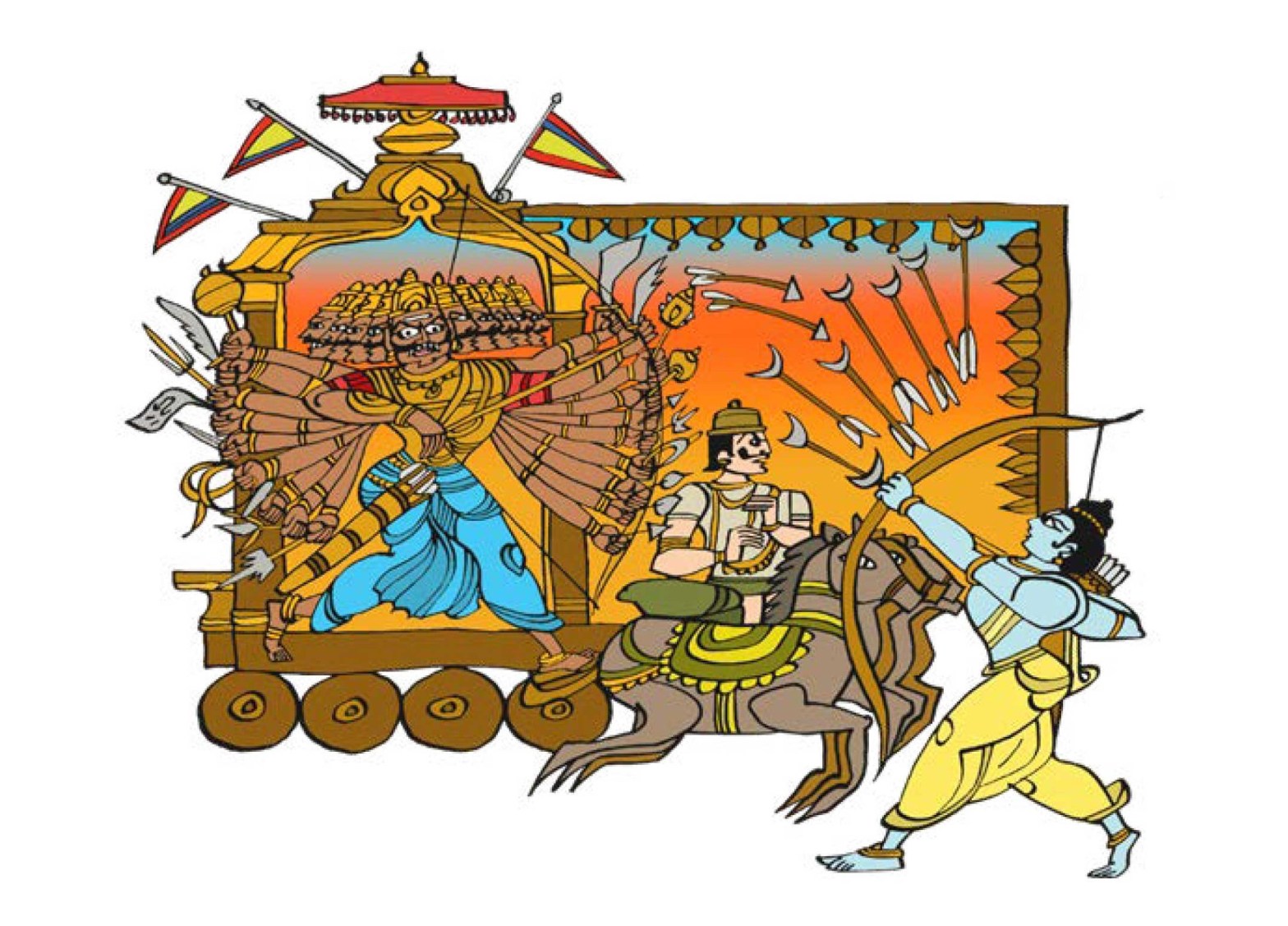
Rama, who is in exile, is fighting the mighty demon king of Lanka Ravana to win back his wife Sita. Ravana abducted Rama’s wife Sita. And they met on a battlefield thousands of years ago. Ravana is no trivial opponent. He is strong, blessed, erudite and powerful. He rolls into the battlefield in his dazzling chariot with armor, weapons and a huge army.
Rama stands up to him to fight – dressed as an ascetic / wanderer, with handmade bows / arrow, an army of monkeys he assembled, barefoot and on the ground.
He seems no match for Ravana.
In the next avatar as Krishna there is another battle scene conversation, when Lord Vishnu as Krishna spoke again – the famous Bhagavad Gita, The Song of God. This scene and conversation is less popularized, and known as the Vibhishana Gita.
Seeing this, Vibhishana – brother of Ravana who defected to Rama’s side to protest immorality of Ravana’s actions – falls at Rama’s feet with tears and despair.
रावनु रथी बिरथ रघुबीरा। देखि बिभीषन भयउ अधीरा॥
Ramacharitra manas, Lanka kand |79-80|
Ravana rode a chariot; Rama, hero of the Raghus, had none.
Seeing this, Vibhishana became disheartened out of fear
नाथ न रथ नहिं तन पद त्राना। केहि बिधि जितब बीर बलवाना॥
Lord, you have no chariot, nothing protecting your body,
nothing on your feet. How will you defeat so mighty a warrior?
How many times have you or your teams said, “Our competition is huge and we are no match” or “They already are a preferred partner, and we have no status” or that “We have no brand or resources to match our competitor”. Maybe your (potential) investors challenged you – ”Why won’t your larger competitors build the same product / features?”
The response:
Rama doesn’t deny the asymmetry or trivialize the strength of his opponent. He can’t even draw on divine powers, constrained in this avatar to be human. So, he replies describing a different chariot that wins battles – one that cannot be bought or built.
सुनहु सखा कह कृपानिधाना। जेहिं जय होइ सो स्यंदन आना॥
RAmacharitra manas, Lanka kand |81|
“Listen, friend,” said the compassionate one,
“the chariot that brings victory is a different one”
And then goes on to describe the wheels, flags, the horses, charioteers, shields, swords, axes, bows, arrows, and armor one needs to win a battle against a larger opponent like Ravana.
The chariot you can’t buy …
सौरज धीरज तेहि रथ चाका “Valor and fortitude are the wheels of that chariot”
Can we make bolder bets and outlast incumbents? Can those bold bets challenge and turn the strength of incumbents against them?
While we can’t outspend them, can we make longer term bets that their quarterly result cycles prevent? And their teams at the edges are not empowered to match?
सत्य सील दृढ़ ध्वजा पताका “Truth and good conduct are its firm flag and banner”
Customers do business with people they like and trust. Can you demonstrate transparency, personal touch and trust that stands out?
बल बिबेक दम परहित घोरे। छमा कृपा समता रजु जोरे॥ “Strength, discernment, self-control and the good of others are its horses, yoked with reins of forgiveness, compassion and equanimity”
Can you focus and say no to 100 things? And not spread yourself wide – that larger organizations are often forced to play everywhere? Can you build offerings and value propositions that are 10X better and not just 10% better for those focus segments – Disruptive Innovation and The Innovator’s Dilemma?
How can you bring in true customer obsession and focus on customer success – not just your own goals?
Can you create a culture of forgiveness, compassion and equanimity to let your teams make mistakes, so they learn faster than your competitors – without fear of retribution or blame?
Eventually it’s culture and learning on the ground that makes or breaks all strategies and game plans.
ईस भजनु सारथी सुजाना “Devotion to the Lord is its skilled charioteer”
Can you make purpose the driver, the charioteer?
In a world where business dealings can feel transactional and solely serving profit making – can a larger purpose inspire you and your teams to go above and beyond? With the belief that outcomes and profits will follow.
The weapons you can’t build …
बिरति चर्म संतोष कृपाना॥ दान परसु बुधि सक्ति प्रचंडा। बर बिग्यान कठिन कोदंडा॥ अमल अचल मन त्रोन सम The weapons to fight are different too. “Contentment is your sword. Generosity is an axe. Unique insights and intellect are the power. Mastery and wisdom are the bow. A steady mind is the quiver that holds the arrows of calm, restraint and discipline. Reverence for guru / mentors as the ultimate armour”
Contentment and frugality can be a virtue in channeling all energies to meaningful innovation and being an agile organization.
Giving first, transparent / extendible offerings and win-win models coupled with differentiated bets based on unique insights, deep domain expertise and steady focus on core strengths – rather than imitating competitors and playing their game – can be why challengers beat established incumbents.
Execution thru restraint and discipline any day beats all marketing and branding. Can one get the right mentors / advisors – with skin in the game like clients – to reduce our learning curve?
The triumph
Rama eventually triumphs over Ravana and his mighty army, in the most unlikely victory.
Teaching us that winning is not always about who has the largest army or assets or branding – but also about building a team, culture, chariots and weapons that money can’t buy.
The return of Rama and Sita back home after 14 years in exile is one of the many reasons we celebrate Diwali. The day of this post.
Happy Diwali.
Useful links
My favorite rendering of the poem by Pandit Chhannulal Mishra
My personal favorite movie depictions still remain
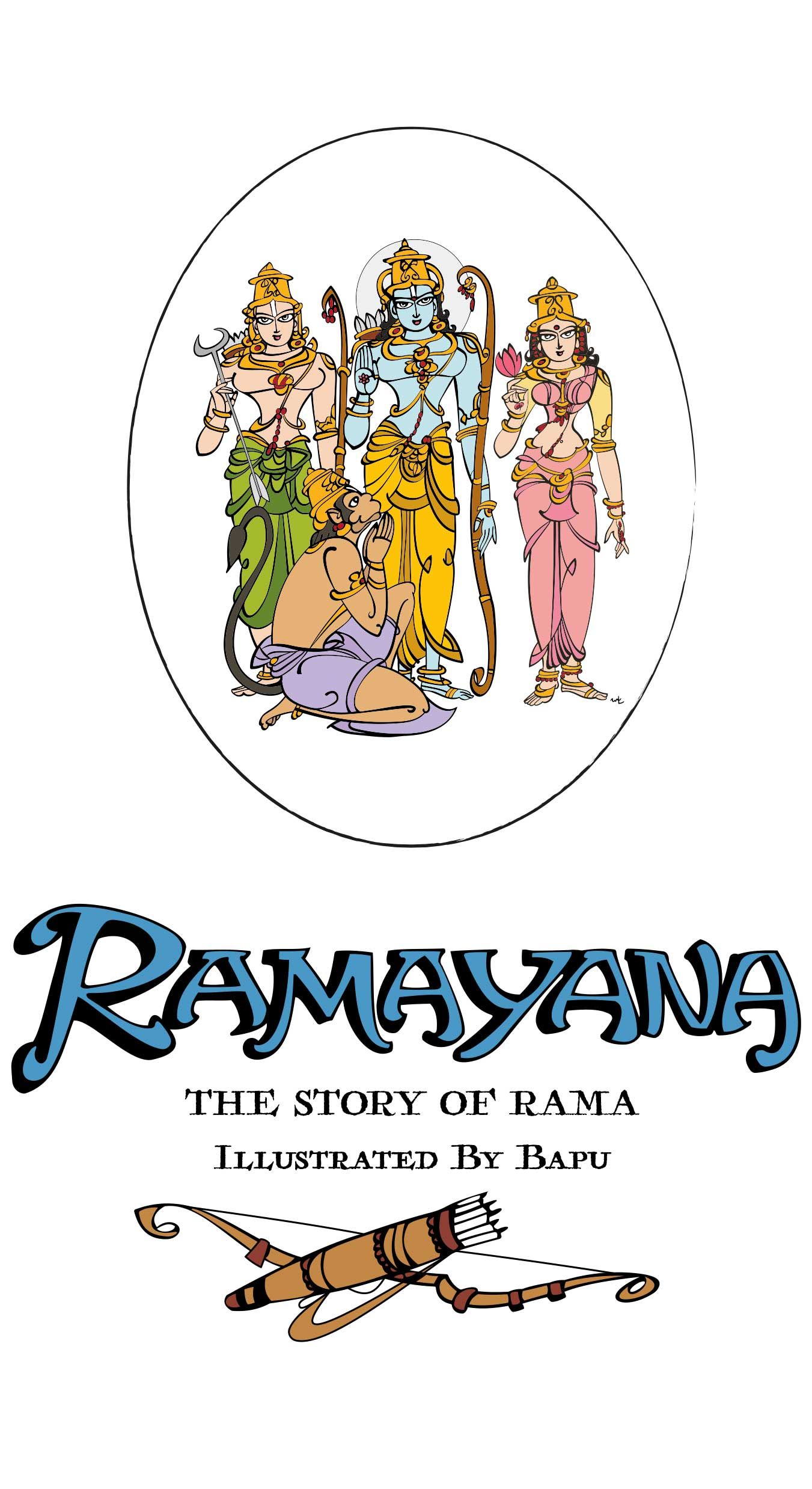
A beautiful rendering of Ramayana with paintings by the incomparable artist Bapu (the primary image is from this book)